
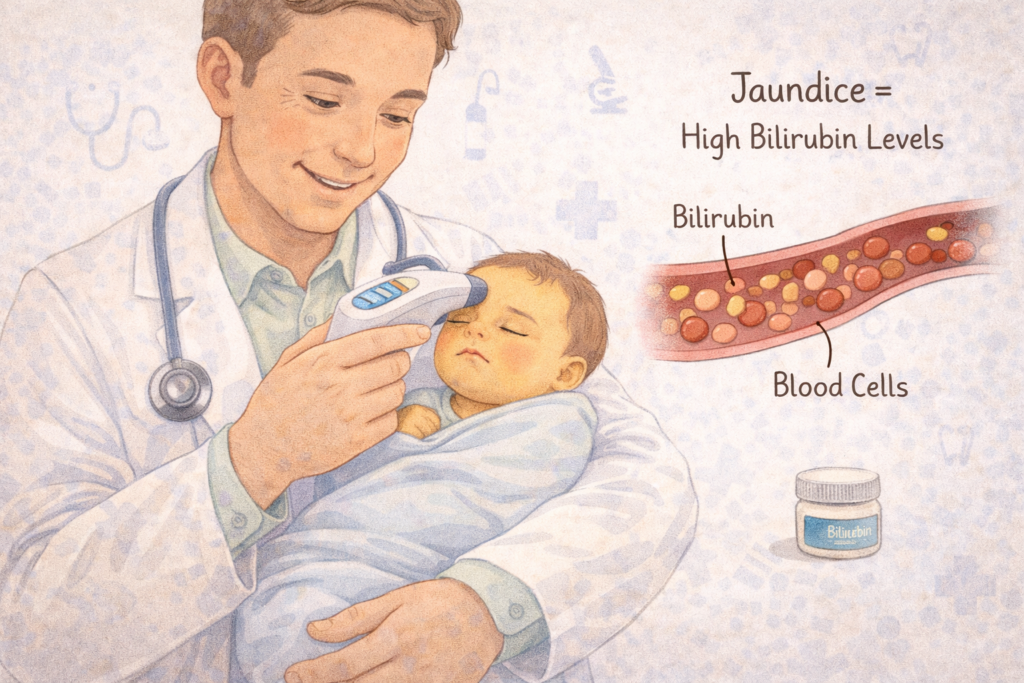
Newborn jaundice is a common condition that affects many babies in the first few days of life, characterized by a yellowing of the skin and eyes. It occurs when the baby’s liver is not yet mature enough to process bilirubin, a yellow pigment produced when red blood cells break down. While most cases of jaundice are mild and resolve on their own, it’s important for parents to understand the causes, signs, and when to seek medical help.
The most common sign of jaundice is yellowing of the baby’s skin, starting from the face and spreading down to the chest, abdomen, arms, and legs. You can check for jaundice by gently pressing on your baby’s skin—if the area turns yellow when pressed, it may be a sign of jaundice. Other signs may include lethargy, poor feeding, and dark yellow urine (like apple juice) or pale stools (light gray or white).
Mild jaundice is usually caused by “physiological jaundice,” which occurs because newborns have more red blood cells than adults, and their liver is still developing. This type of jaundice typically appears 2-3 days after birth, peaks at 4-5 days, and resolves by 2 weeks of age. Breastfed babies may develop “breastfeeding jaundice” due to low milk intake in the first few days, which can be resolved by ensuring the baby is nursing frequently.
The main treatment for mild jaundice is phototherapy—placing the baby under special blue lights that help break down bilirubin in the skin. For very mild cases, increasing feedings (to help the baby pass bilirubin through urine and stool) may be enough. Your pediatrician will check your baby’s bilirubin levels before discharge from the hospital and again a few days later to monitor for signs of worsening jaundice.
It’s important to contact your pediatrician if you notice any signs of jaundice, especially if the yellowing spreads quickly, the baby is lethargic or not feeding well, or the urine is dark yellow. Severe jaundice, if left untreated, can lead to serious complications, so early detection and monitoring are key. With proper care, most babies with jaundice recover fully without long-term effects.
Leave a Reply