
Teething is a normal milestone for babies, usually starting around 4-7 months of age, though some babies may start earlier or later. As baby teeth push through the gums, it can cause discomfort and fussiness, leaving many parents looking for gentle ways to help their little one find relief. Understanding the signs of teething and simple relief methods can make this transition easier for both you and your baby.
Common teething signs include increased fussiness and irritability, excessive drooling (often leading to a rash around the mouth), chewing on everything (toys, fingers, blankets), decreased appetite (due to gum pain), and disrupted sleep. Some babies may also develop a low-grade fever (below 101°F/38.3°C) or mild diarrhea, though these symptoms are less common and should be monitored closely.
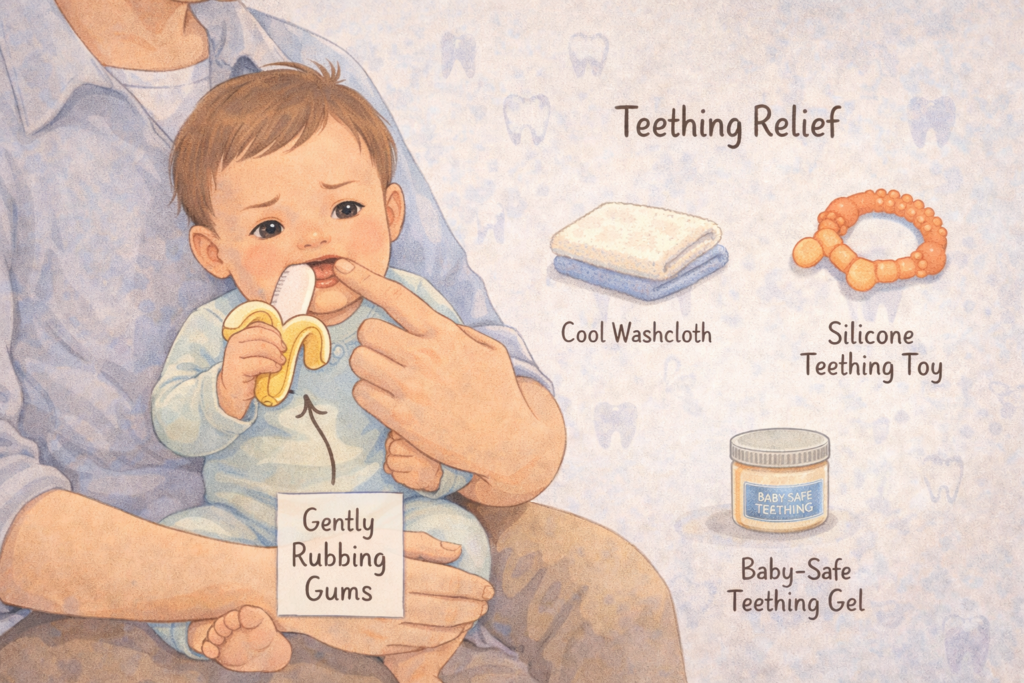
Gentle relief methods can help soothe your baby’s sore gums. A cool, clean teething toy is a great option—chill it in the refrigerator (not the freezer, as extreme cold can damage gums) to provide a numbing effect. A clean, damp washcloth, chilled slightly, can also be chewed on for relief. You can gently rub your baby’s gums with a clean finger (washed thoroughly) to apply gentle pressure, which many babies find comforting.
If your baby’s discomfort is severe, consult your pediatrician about baby-safe teething gels or infant acetaminophen (for babies 6 months and older). Avoid teething tablets or home remedies that contain benzocaine or lidocaine, as these can be unsafe for infants. Also, keep an eye on the rash around your baby’s mouth—pat the area dry frequently and apply a gentle, fragrance-free moisturizer to prevent irritation.
Teething can last for several months, as each set of teeth pushes through. Be patient with your baby, and offer plenty of extra love and comfort during this time. Remember, every baby’s teething experience is different—some may sail through it with little fuss, while others may need more support. With gentle care, you can help your baby navigate teething comfortably.
Leave a Reply