
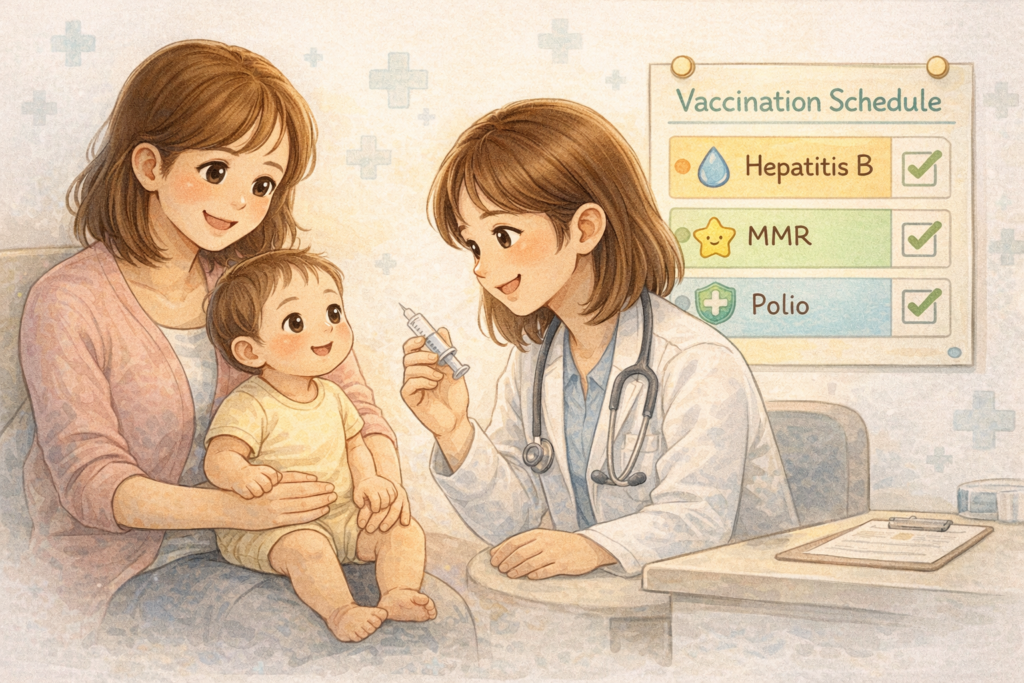
Vaccinations are one of the most important ways to protect your newborn from serious, potentially life-threatening diseases. The first vaccines are given shortly after birth, and a regular schedule follows in the first year and beyond. Understanding the newborn vaccination schedule can help you feel prepared and ensure your baby gets the protection they need.
Shortly after birth (within 24 hours), most babies receive their first dose of the hepatitis B vaccine. This vaccine protects against a virus that can cause liver damage, and the first dose is critical because newborns are particularly vulnerable to infection. A second dose is usually given at 1-2 months of age, and a third dose at 6-18 months.
At 2 months old, your baby will receive a round of key vaccines, including DTaP (protects against diphtheria, tetanus, and pertussis/whooping cough), Hib (protects against Haemophilus influenzae type b, which can cause meningitis), polio, and pneumococcal conjugate vaccine (PCV, protects against pneumonia and ear infections). These vaccines are given as injections, often in the thigh, and some may be combined to reduce the number of shots.
It’s normal for babies to have mild side effects after vaccinations, such as redness or swelling at the injection site, a low fever, or fussiness. These side effects usually last 1-2 days and can be managed with a cool compress on the injection site and infant acetaminophen (if recommended by your pediatrician). Severe side effects are rare, but if your baby has a high fever, difficulty breathing, or a rash, contact your doctor immediately.
Stick to the recommended schedule as closely as possible—delaying vaccines can leave your baby vulnerable to diseases. Your pediatrician will keep track of your baby’s vaccination records and remind you when the next doses are due. Don’t hesitate to ask your doctor any questions or share any concerns you have about vaccines—they are there to help you make informed decisions about your baby’s health.
Leave a Reply