Around 6–8 months of age, most babies are ready to start exploring finger foods—small, soft pieces of food that they can pick up and feed themselves. Introducing finger foods is an exciting milestone that helps babies develop fine motor skills, hand-eye coordination, and independence, while also expanding their palate and preparing them for table food as they grow. With the right approach and safety precautions, finger foods can be a fun and nutritious addition to your baby’s diet.
Before introducing finger foods, make sure your baby is ready: they should be able to sit up unsupported, hold their head steady, and pick up small objects with their fingers (pincer grasp, which usually develops around 7–8 months). Start with soft, easy-to-mash foods that won’t pose a choking hazard—avoid hard, crunchy, or small foods (like nuts, seeds, or whole grapes) that could get stuck in your baby’s throat.
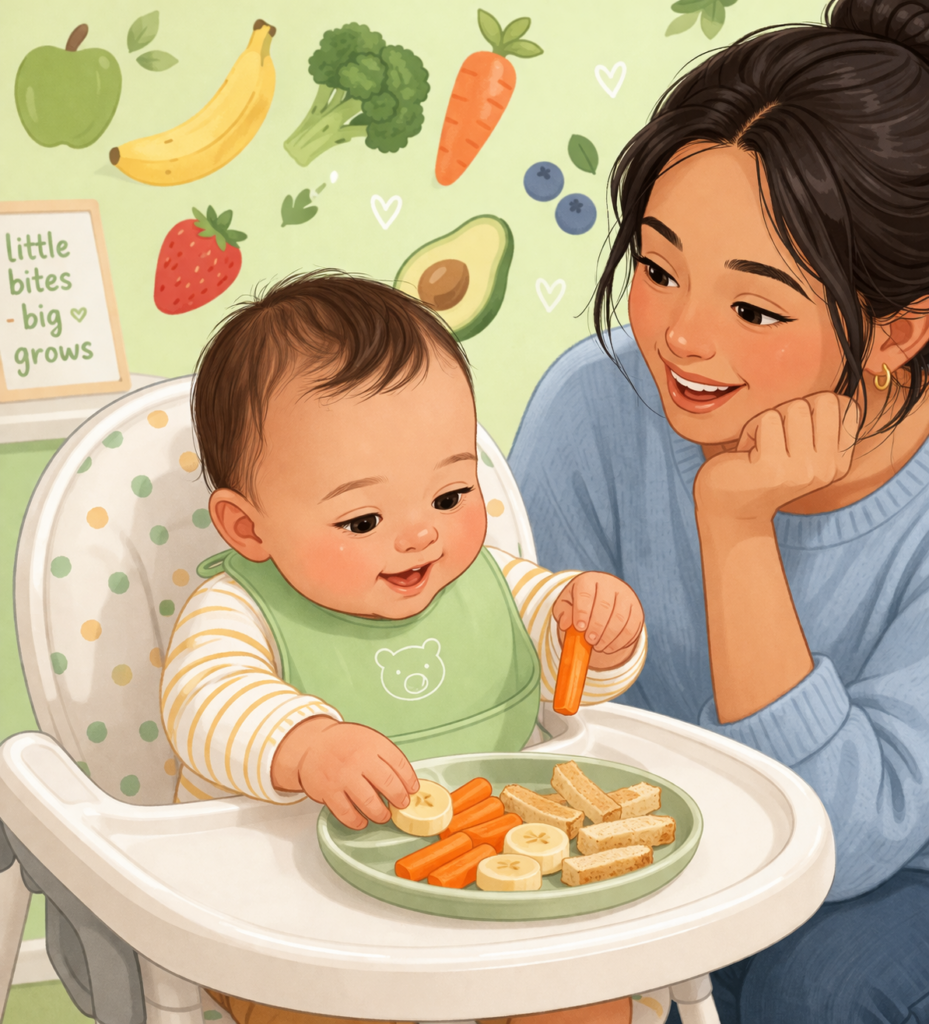
Good first finger foods include: soft, cooked vegetables (carrots, sweet potatoes, peas, or broccoli florets, steamed until tender), soft fruits (banana slices, avocado chunks, or peeled apple slices cooked until soft), small pieces of toast (lightly toasted and cut into strips), cooked pasta (small shapes like macaroni), and soft cheese (cubed or shredded). Cut all foods into small, bite-sized pieces (about the size of your baby’s thumbnail) to make them easy to pick up and swallow.
When introducing finger foods, always supervise your baby closely while they eat—never leave them alone, even for a few seconds. Encourage your baby to pick up the food with their hands, and let them feed themselves, even if it’s messy. Messy eating is part of the learning process, and it helps your baby develop confidence and independence. You can also offer a spoon for practice, but let your baby lead the way.
Introduce one new finger food at a time, and wait 3–5 days before introducing another, to watch for signs of food allergies. If your baby gags while eating, don’t panic—gagging is a normal reflex that helps prevent choking, and it usually means the food is too big or too hard. Adjust the size or texture of the food, and try again. Over time, as your baby’s skills improve, you can gradually offer more varied and textured finger foods, helping them develop healthy eating habits that will last a lifetime.
Leave a Reply