Crying is your baby’s only way to communicate their needs, feelings, and discomfort in their first few months of life. All babies cry—it is a normal, healthy part of development, and it does not mean you are a bad parent. Over time, you will learn to recognize the different types of cries your baby makes, each signaling a specific need. Learning to interpret these cries helps you respond quickly, soothe your baby faster, and build a stronger, more trusting bond.
The most common cry is the **hunger cry**, which is usually short, low-pitched, and comes in periodic waves. It may start softly and grow louder if your baby is not fed quickly. This cry often includes rooting reflexes (turning the head to search for a bottle or breast) and hand-to-mouth movements. Responding to this cry promptly helps your baby feel secure and maintains healthy feeding habits.
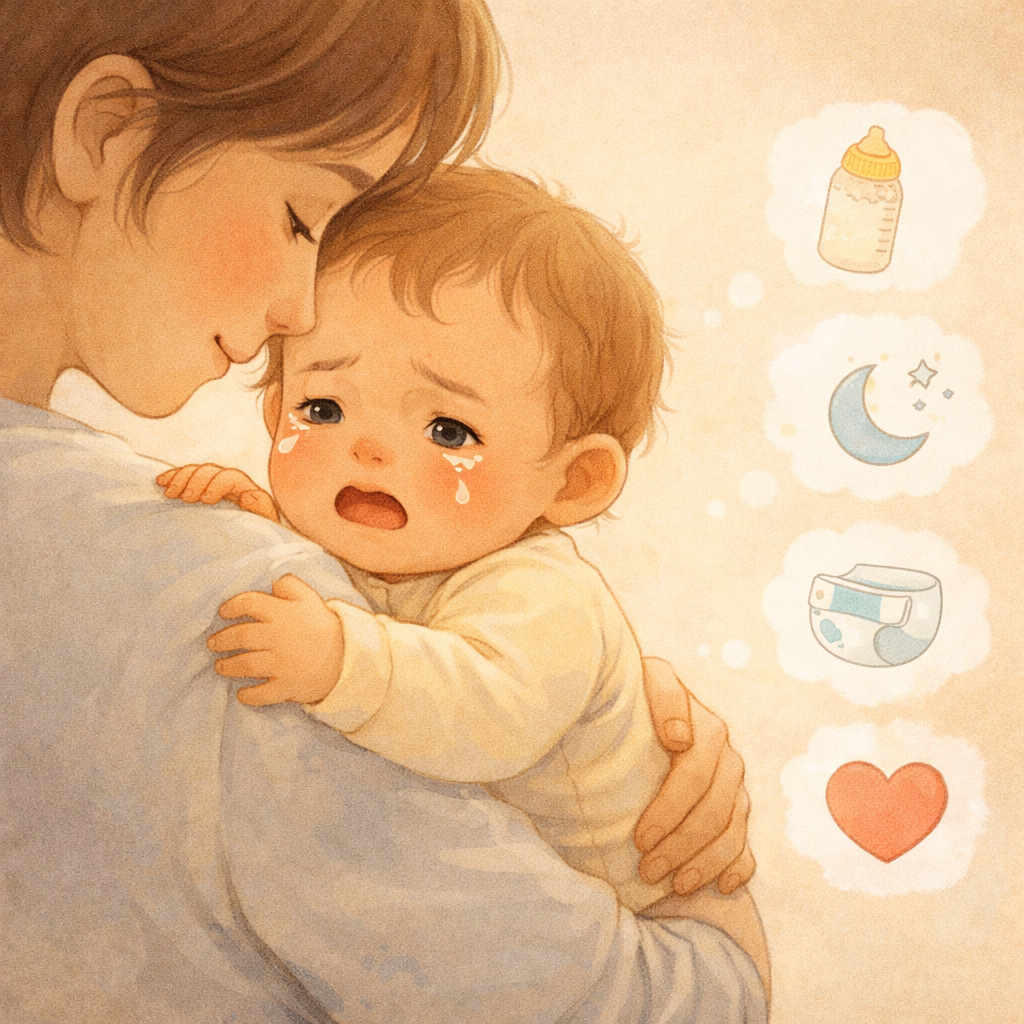
A **tired cry** is often whiny, fussy, and accompanied by eye rubbing, yawning, or pulling away from stimulation. Overtired babies may cry sharply and seem unable to settle down, even if they are exhausted. This cry means your baby needs quiet, dim surroundings and a chance to nap. Holding them close, rocking gently, or offering a pacifier can help them calm down and fall asleep.
A cry for **discomfort** (a wet or soiled diaper, tight clothing, or being too hot or cold) is usually constant and mild, but persistent. Your baby may squirm or kick their legs to signal unease. Check their diaper first, adjust their clothing, or move them to a more comfortable spot—simple fixes often stop this cry right away.
A **pain cry** is sudden, loud, high-pitched, and intense, and it may not stop immediately with cuddling. This cry can signal gas, colic, teething pain, or another discomfort. If your baby has this cry, check for obvious issues first, and try gentle tummy rubbing or holding them upright to ease gas. If the cry continues for an extended time, contact your pediatrician to rule out medical issues.
Sometimes, babies cry just to be held or comforted—this cry is soft and stops when you pick them up or cuddle them. This is not “spoiling” your baby; it builds trust and helps them feel loved and secure. As your baby grows, they will cry less and communicate in other ways, but responding to their cries with patience and love in the early months lays the foundation for emotional security.
Leave a Reply